
Short, structured movement sessions spread across your working day — designed for office desks, home offices, and life on the move across New Zealand.
Free informational content only. No fees. Not medical advice.
Movement designed to fit real schedules, not replace them.
A personal micro-workout plan is a structured schedule of brief movement sessions — typically three to five minutes each — placed at regular intervals throughout your working day. Rather than saving all your physical activity for a single evening session, these plans distribute gentle, purposeful movement across the hours when your body and mind need it most.
Each plan is tailored to your environment. If you sit at a desk in an Invercargill office, your sessions focus on posture, wrist mobility, and hip release. If you work from a home kitchen table, your plan incorporates household items like towels and chairs. If you travel between client sites, your sessions use standing space in airports, rest areas, and hotel rooms.
The goal is not exhaustion. It is consistent, low-intensity activation that keeps you moving, supports comfortable posture, and adds variety to long periods of sitting. Some published exercise-science reviews suggest that accumulated short bouts of light activity across a day may offer practical benefits for people with sedentary routines — but outcomes depend on the individual, and this site does not promise specific results.
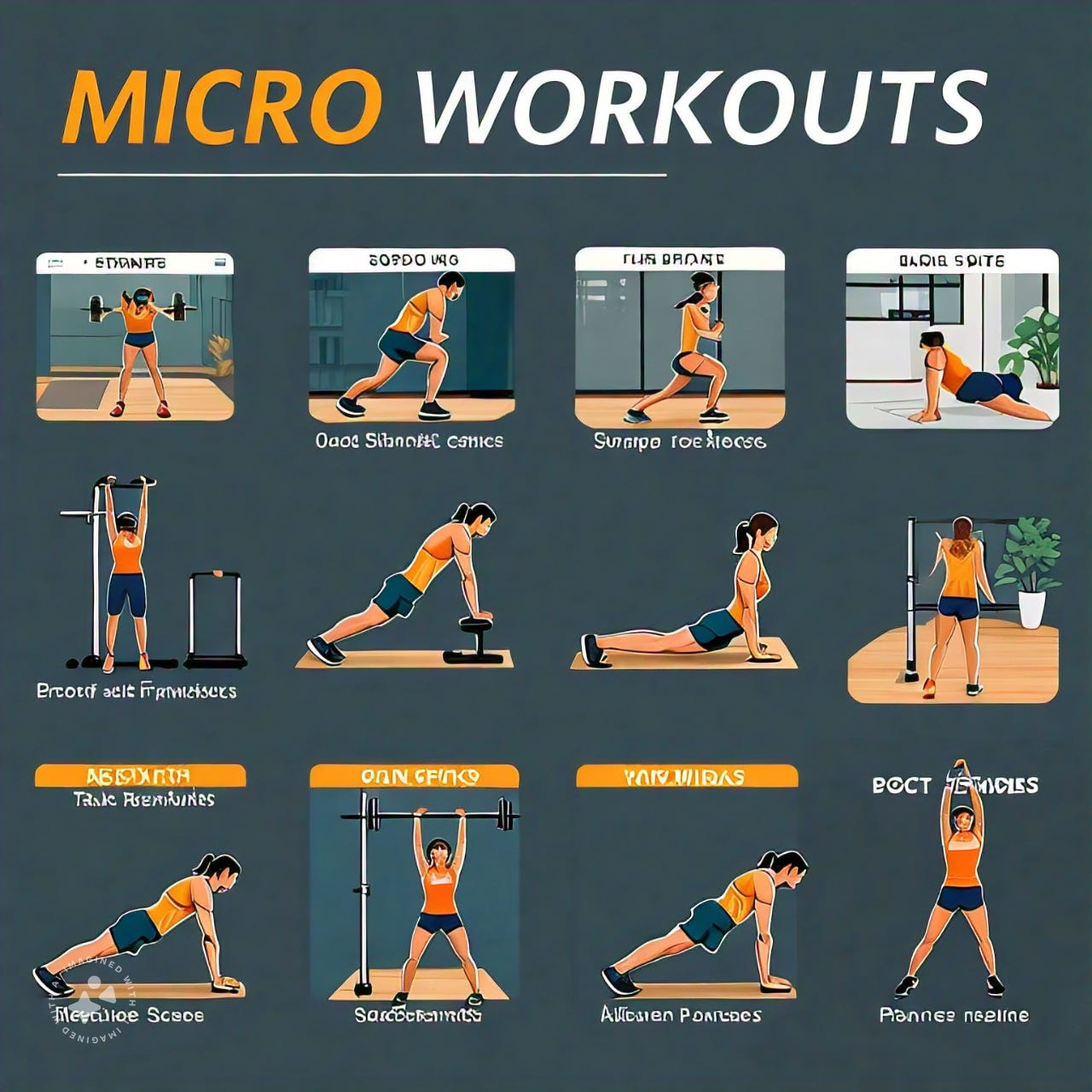
A practical comparison of hourly micro-sessions and a single evening workout — for general education only.
When you move for three to five minutes every hour, you add regular breaks from sitting, encourage blood flow, and give your muscles and joints brief activation. Some research — including a 2016 paper in the International Journal of Behavioral Nutrition and Physical Activity — has explored whether breaking up prolonged sitting with light activity may support post-meal metabolic responses compared with one longer walk later in the day. Findings vary by study design, and we share them for context only, not as a promise of outcomes.
Hourly movement also interrupts long static postures. Extended sitting is commonly associated with stiffness, reduced mobility, and discomfort in everyday life. Brief standing and stretching sessions may help you feel more comfortable during the workday, though individual responses differ.
An evening workout after a full day of sitting can still be a positive part of your week — it may support cardiovascular fitness and muscular strength. However, it does not replace the value of moving during the working day itself. If most of your waking hours are spent sitting, a single gym session addresses only part of that overall pattern.
An evening workout may help you unwind after work, but it does not replace the value of moving during the day itself. Short daytime breaks may help you manage feelings of tension, stiffness, or fatigue that build up during long sitting periods — without adding another demanding session to an already busy schedule.
Every workspace has different constraints. Your movement plan should match where you actually spend your day.
Built around ergonomic principles for desk-based professionals. Sessions target neck tension from monitor use, wrist strain from typing, hip tightness from prolonged sitting, and eye fatigue from screen focus. Exercises are discreet enough for open-plan offices and require no equipment beyond your chair and desk.
Example exercises include seated thoracic rotations, standing calf raises at your workstation, desk push-ups, and the 20-20-20 eye rest technique combined with neck glides.
View Office PlanDesigned for people who work from kitchens, spare bedrooms, and living room corners. This plan turns everyday household items into movement tools. A sturdy chair becomes support for split squats. A rolled towel becomes a grip strengthener. A wall becomes your balance partner for single-leg stands.
Home workers often move less than office workers because there is no commute and no colleague coffee breaks. This plan builds movement into your domestic routine with kitchen-counter stretches, hallway walking intervals, and stair climbs between tasks.
View Home PlanFor consultants, sales professionals, and anyone whose office is a car, train, or airport lounge. Sessions focus on movements that require minimal space and no equipment. Ankle circles during flights, shoulder blade squeezes at rest stops, wall sits in hotel corridors, and walking meetings around car parks.
Travel disrupts routine more than any other work style. This plan uses time-boxed sessions that fit into boarding waits, petrol station stops, and hotel room mornings before your first meeting.
View Travel Plan
Long workdays with little movement can leave you feeling tense, stiff, or mentally drained. Micro-workouts are designed as short, low-intensity pauses — not as intense fitness challenges. A three-minute session of gentle movement and slow breathing may help you feel more settled before returning to your task.
This approach is different from a high-intensity evening session that adds further physical demand after a demanding day. The focus here is comfort, variety, and sustainable habits — not performance targets or measurable physiological change.
Think of each micro-session as a brief pause in your routine. You stand up, move your spine, breathe steadily, and continue your day. Many people find regular breaks helpful for afternoon focus and general comfort, although experiences are personal and not guaranteed.
From assessment to daily routine in four straightforward steps.
Move with awareness. These general principles apply to every micro-workout session on this site and do not replace professional advice.
Join our community sessions and workshops across New Zealand in 2026.
A free 45-minute group session at Esk Street Community Space introducing hourly movement routines for office workers. Bring comfortable clothing and a water bottle. Registration opens four weeks before the event.
Live virtual workshop covering how to structure micro-workouts around video calls, childcare, and household tasks. Includes a downloadable home exercise reference card and Q&A with movement coaches.
Practical demonstrations of airport, hotel, and rest-stop exercises for professionals who spend more time in transit than at a fixed desk. Session includes a printed pocket guide for on-the-go routines.
An evening presentation exploring how brief movement sessions may fit into everyday working routines. Open to all, with a focus on practical lifestyle habits — not medical or therapeutic advice.
Common questions about micro-workout plans and how they fit into a working day.
Who we are and what this website offers.
Expelwashing.ddd is a New Zealand-based informational website operated from 194 Esk Street, Invercargill 9810. We create and publish free educational content about short movement breaks for people who work at desks, from home, or while travelling.
Our purpose is to share practical, environment-specific movement ideas that fit real working routines. We occasionally host community workshops and online talks listed on our Events Calendar. We do not operate as a gym, medical clinic, telehealth service, or online store.
All content is written for general audiences aged 18 and over. If you have questions about who we are, what we offer, or how to contact us, visit our Contact page or email writetous@expelwashing.world.